 21 Day vs 28 Day Yoga Teacher Training in Bali — Which Is Right for You?
Choosing a yoga teacher training program is a big decision. You’re investing time, money, and real personal energy. And when you add Bali to the equation — one of the world’s most sought-after destinations for yoga and spiritual growth — the stakes feel even higher.
One of the most common questions we hear from aspiring teachers is this: Should I do a 21 day or a 28 day yoga teacher training in Bali?
It’s not a simple answer. The right choice depends on your schedule, your goals, your budget, and — honestly — how deep you want to go. This guide breaks down everything you need to know. By the end, you’ll have a clear sense of which format fits your life right now.
What Both Programs Actually Have in Common
Before diving into the differences, it helps to understand what stays consistent across both formats. Whether you choose 21 days or 28 days, most accredited programs in Bali cover the same core curriculum.
Both formats typically follow the Yoga Alliance 200-hour registered teacher training (RYT-200) standards. That means both programs qualify graduates to teach yoga professionally. Both lead to the same internationally recognized certification.
Core curriculum elements in both programs usually include:
- Asana (postures) and alignment
- Pranayama (breathwork) and meditation
- Yoga philosophy and the study of texts like the Yoga Sutras of Patanjali
- Anatomy and physiology for yoga teachers
- Teaching methodology and practicum
- Sanskrit terminology
The difference is not what gets taught. The difference is how much time you have to absorb, practice, and integrate what you learn.
Bali itself is a unique container for this kind of training. The island’s deep Hindu-Balinese spiritual culture, its lush natural environment, and its long-established yoga community make it one of the most conducive places in the world to deepen your practice. Schools like Radiantly Alive in Ubud, The Yoga Barn, and others have built reputations around immersive, high-quality teacher training programs that draw students from every continent.
What a 21 Day Yoga Teacher Training in Bali Looks Like
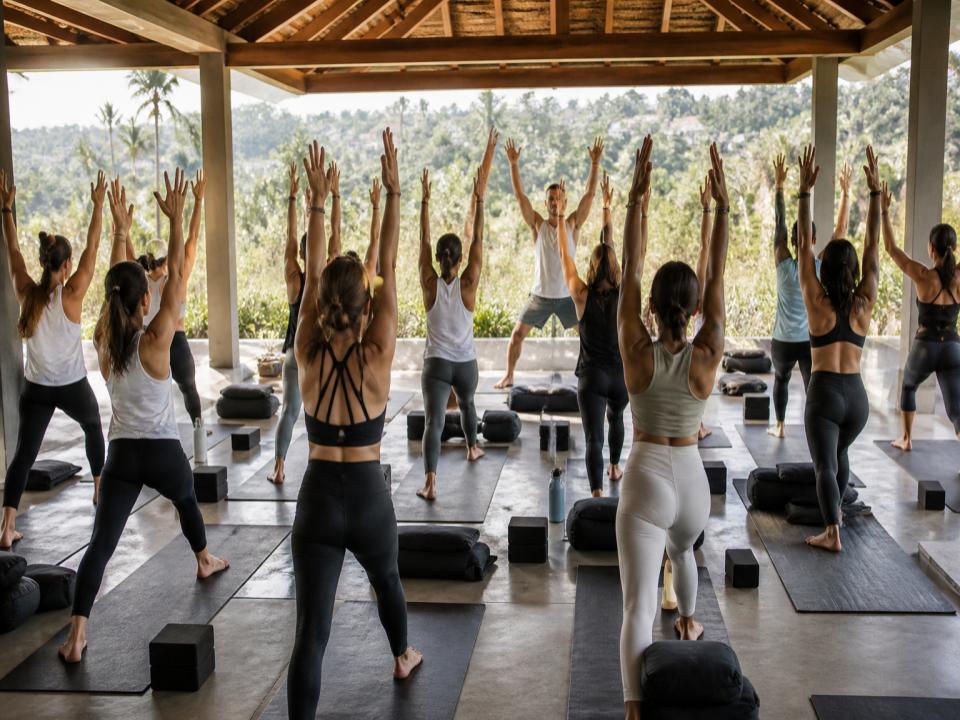
A 21 day program is intense. It’s designed to deliver a complete 200-hour certification within three weeks. That means the daily schedule is full. Most programs run six to seven days per week, with sessions starting early in the morning and often continuing into the evening.
A typical day during a 21 day training might look like this:
- 6:00am — Morning pranayama and meditation
- 7:30am — Asana practice (led or Mysore-style)
- 9:30am — Breakfast break
- 10:30am — Anatomy or philosophy lecture
- 12:30pm — Lunch break
- 2:00pm — Teaching methodology or practicum
- 4:00pm — Workshop or adjustment clinic
- 6:30pm — Evening meditation or restorative practice
Days are long. The pace is demanding. Rest time is limited. That said, many students find the intensity clarifying. There’s little room for distraction. You show up fully every single day, and that commitment produces a kind of transformation that slower programs don’t always replicate.
The Chopra Center and other wellness educators have documented how immersive experiences can accelerate learning by creating high focus and heightened neurological engagement. Immersion removes the noise of everyday life. That’s part of the power of the 21 day format.
The 21 day format works particularly well for:
- Professionals with limited vacation time
- People who thrive under structured, high-intensity environments
- Those who want to minimize accommodation costs
- Students who have an existing strong personal practice
However, it’s important to be realistic. If you’re brand new to yoga — or if you’re managing a health condition, injury, or burnout — three weeks of this intensity may not serve you well. The pace leaves little room for rest and integration.
What a 28 Day Yoga Teacher Training in Bali Looks Like
A 28 day program covers the same 200-hour curriculum, but spreads the content across four weeks instead of three. This gives you roughly 25% more breathing room.
That extra week changes the experience in meaningful ways.
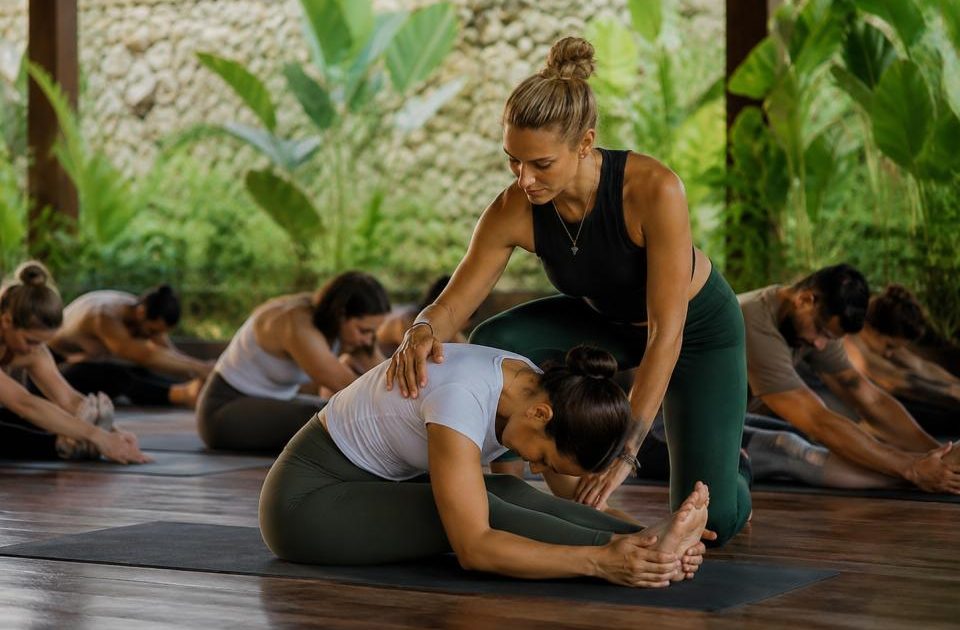
The daily schedule in a 28 day program is still structured and demanding — but the pressure is lower. There’s more time for self-study, journaling, and integration. You might have one or two lighter days per week. Rest and recovery become part of the program design rather than an afterthought.
Many 28 day programs also use the additional time to go deeper into areas that shorter programs must rush through. Teaching practicums get more attention. Philosophy discussions go further. Students have more time to ask questions, process their experiences, and actually embody what they’re learning rather than just memorizing it.
Yoga International notes that one of the most common complaints from teacher training graduates is feeling like they didn’t have enough time to truly absorb the material before certification. A 28 day format directly addresses that concern.
There’s also the emotional dimension. Yoga teacher training is not just an intellectual exercise. It can bring up deep personal material — old patterns, unresolved emotions, physical limitations you’d rather ignore. Having an extra week gives you space to process those experiences without feeling overwhelmed.
The 28 day format works particularly well for:
- First-time yoga teacher training students
- People who tend toward burnout or overwhelm
- Those who want a richer cultural immersion in Bali
- Students who process information at a more reflective pace
- Anyone prioritizing depth of learning over speed of completion
The obvious trade-off is time. Not everyone can take four weeks away from work, family, or other responsibilities. That’s a real constraint, and it’s one of the primary reasons the 21 day format exists.
The Real Difference: Pace, Integration, and Depth
On paper, seven days doesn’t sound like much. In practice, that week represents a genuinely different learning experience.
Think about learning any complex skill — a language, an instrument, a new software system. Intensive crash courses produce results. But longer, more spacious learning environments tend to produce deeper fluency. The same principle applies to yoga teacher training.
In a 21 day program, you receive a high volume of information in a compressed window. Your brain is working hard every day. You’re practicing teaching almost from day one, which builds confidence quickly. But there’s limited time to reflect, to sit with questions, or to revisit concepts that confused you the first time.
In a 28 day program, the curriculum breathes. You might spend an extra class revisiting hip anatomy because the group had questions. You might have an afternoon where you practice teaching in pairs without any formal structure. You might have a day that’s lighter, which lets your nervous system recover before the next intensive stretch.
Research on learning and retention consistently shows that spaced repetition and built-in rest improve long-term retention compared to massed practice. This doesn’t mean 21 day programs produce worse teachers — it means that the type of learner you are matters enormously when choosing between them.
Ask yourself this honestly: Do you absorb new information best when you’re pushed hard and surrounded by structure? Or do you integrate better when you have time to journal, process, and revisit material at your own pace?
Neither answer is wrong. Both programs produce skilled, certified yoga teachers every year. The question is which environment helps you learn best.
 Cost Differences: What to Expect
Cost is a practical consideration, and it’s worth being transparent about what the numbers look like.
A 28 day program in Bali typically costs more than a 21 day program. The gap comes from two places: the program fee itself (more teaching days, more staff hours) and your personal costs (accommodation, food, and transport for an extra week).
Here’s a rough breakdown of what to expect in Bali as of 2024–2025:
Program fees:
- 21 day YTT in Bali: approximately USD $1,800–$3,200
- 28 day YTT in Bali: approximately USD $2,200–$4,000
Many programs include accommodation and meals in the fee, which significantly changes the value calculation. Always check what’s included before comparing prices. A $2,500 all-inclusive program is a very different proposition than a $2,000 fee with separate accommodation costs.
Additional personal costs for an extra week in Bali:
- Budget accommodation (guesthouses, shared rooms): USD $15–$40/night
- Mid-range accommodation: USD $40–$90/night
- Food: USD $15–$30/day eating locally
So the real cost of a 28 day vs 21 day program — factoring in living expenses — might be anywhere from $300 to $1,200 more, depending on your lifestyle. That’s meaningful, but it’s also worth weighing against the value of an extra week of learning and integration.
Numbeo’s cost of living data for Bali can help you build a realistic personal budget before you book.
The flip side of the cost equation is income. Every extra week you spend in Bali is a week you’re not earning at home. For people with salaried jobs or significant income, the opportunity cost of an extra week may outweigh the program fee difference entirely.
Accreditation and Certification: Does the Length Matter?
Both 21 day and 28 day programs that meet the 200-hour threshold can receive Yoga Alliance RYT-200 registration. This is the globally recognized standard for yoga teacher certification.
What matters for accreditation is not the length of the program in days — it’s whether the program meets the required contact hours, curriculum standards, and school registration criteria.
A 21 day program accomplishes this by scheduling more hours per day. A 28 day program spreads those hours across more days. From a certification standpoint, both formats can produce equivalent qualifications.
That said, if you’re looking at a specific school, always verify:
- The school is a Registered Yoga School (RYS) with Yoga Alliance
- The program includes all required curriculum components
- The certificate states 200 hours clearly
- The school provides Yoga Alliance registration support after graduation
Beyond Yoga Alliance, you may want to check whether the school has additional affiliations — for example with Yoga Australia, British Wheel of Yoga, or regional bodies depending on where you plan to teach.
Don’t assume that a longer program is automatically more rigorous. Scrutinize the curriculum and the school’s reputation equally carefully, regardless of the program length you choose.
 Who Should Choose the 21 Day Program?
The 21 day format suits a specific type of student well. Here’s an honest look at who it serves best.
You’re a strong, consistent practitioner. You’ve been practicing yoga for at least one to two years, ideally with some regularity. You understand foundational alignment and have exposure to basic pranayama. You don’t need extra time getting familiar with the basics — you’re ready to teach them.
You have limited time off. Many working professionals simply cannot take four weeks away. A 21 day program lets you pursue your certification dream without sacrificing your career. That’s a genuine gift.
You perform well under pressure. Some people thrive in high-intensity learning environments. They focus sharply, absorb quickly, and find the intensity energizing rather than draining. If that’s you, the 21 day format may actually suit your learning style better.
You’re returning to certification after a break. If you’ve done some prior training — a foundational course, an advanced workshop series, or a previous yoga teacher training that you didn’t complete — a 21 day intensive helps you build on existing knowledge efficiently.
You want to get certified and start teaching soon. The job market for yoga teachers moves. If you have a studio lined up, a retreat to lead, or a seasonal opportunity to pursue, the 21 day format gets you certified faster.
Who Should Choose the 28 Day Program?
The 28 day format suits a different kind of student — not a less capable one, but a different one.
You’re newer to yoga. If you’ve been practicing for less than a year, or if your practice has been inconsistent, the extra week gives you more time to build the physical and conceptual foundation you need. Rushing through teacher training as a beginner is one of the most common mistakes people make.
You want a transformational experience, not just a qualification. Some people come to yoga teacher training not primarily to become teachers, but to deepen their personal practice, reconnect with themselves, or go through a meaningful life transition. The 28 day format honors that intention. The extra time to be in Bali — to visit temples, sit in silence, explore the culture — adds an irreplaceable dimension to the experience.
You’re recovering from burnout or stress. If you’ve come to this training partly to escape exhaustion, a 21 day intensive might compound the problem. The 28 day format gives your nervous system room to reset.
You tend to be a reflective learner. Some people process through action. Others process through reflection, journaling, and quiet. If you belong in the second category, the 28 day format creates the conditions you need to truly learn.
You want to go deeply into philosophy and teaching. The Yoga Sutras, the Bhagavad Gita, the nature of consciousness — these topics deserve unhurried attention. An extra week means your lecturers aren’t constantly racing the clock.
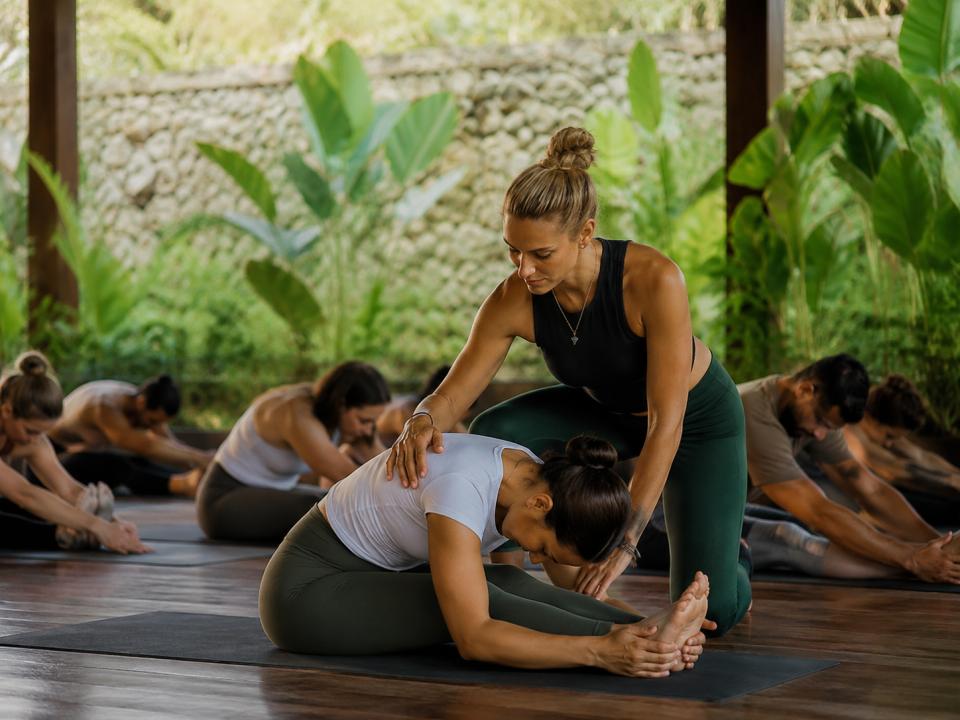 The Bali Factor: Why Location Matters More Than You Think
Any discussion of yoga teacher training in Bali needs to take seriously what Bali actually offers beyond the classroom.
Bali is not a generic tropical backdrop. It is a living spiritual culture. The Balinese practice Agama Hindu Dharma — a unique synthesis of Hinduism, Buddhism, and animism that permeates daily life. Every morning, families lay out canang sari (flower offerings) at temples, shrines, and doorways. Ceremonies happen regularly throughout the week. The air carries incense. Gamelan music drifts through the streets.
This environment matters for yoga teacher training because yoga is not purely a physical practice. It emerged from a living philosophical and spiritual tradition. Being in Bali — especially in Ubud, the cultural and spiritual heart of the island — creates a resonance between what you’re studying and where you are studying it that you simply cannot replicate in a hotel conference room.
The 28 day program gives you more time to let that environment work on you. You can visit Pura Besakih, Bali’s most sacred temple complex. You can walk the rice terraces of Tegallalang. You can sit by a river, watch a sunset over the Indian Ocean, or attend a traditional Kecak fire dance. These experiences are not distractions from your training — they are part of it.
With a 21 day program, you’ll have less time for exploration. That’s not a catastrophic trade-off, but it’s worth acknowledging. You came to Bali. Build in a few extra days before or after your training if you can — regardless of which format you choose.
Questions to Ask Any School Before You Book
Choosing between 21 days and 28 days matters less than choosing the right school. A well-run 21 day program will outperform a mediocre 28 day program every time. Here are the questions you should ask before you commit:
About the curriculum:
- Is your school registered with Yoga Alliance?
- What style(s) of yoga does the training cover?
- What is the ratio of practice hours to lecture hours?
- How much time is dedicated to teaching practicum?
About the teachers:
- Who leads the training? What are their qualifications and experience?
- Will the same teachers be present throughout, or does the faculty rotate?
- How accessible are the lead teachers for one-on-one questions?
About the logistics:
- Is accommodation included? What type?
- Are meals provided? Are dietary needs accommodated?
- What is the refund or deferral policy if I need to cancel?
- How many students are in each cohort?
About outcomes:
- What percentage of graduates go on to teach actively?
- Do you offer ongoing support or mentorship after graduation?
- Can I speak to a recent graduate before booking?
Yoga Alliance’s school directory lets you verify a school’s registration status directly. Always check before you pay a deposit.
A Practical Decision Framework
If you’re still unsure which format to choose, work through this simple framework.
Start with your schedule. How many weeks can you realistically take off? If the answer is three, the decision is made for you. If you can do four weeks, continue to the next question.
Assess your current practice level. Have you been practicing yoga consistently for at least 18 months? If yes, you can likely handle a 21 day format. If no, lean toward 28 days.
Consider your learning style. Do you absorb best under pressure, or do you need space to process? High-pressure learners → 21 days. Reflective learners → 28 days.
Think about your goals. Do you want to get certified and start teaching as soon as possible? Or do you want a deep, possibly life-changing immersion? Fast track → 21 days. Transformational depth → 28 days.
Run the numbers. Calculate the full cost of each option — program fee plus accommodation, food, and opportunity cost. Make sure the budget works for your situation without creating financial stress.
Once you’ve worked through these five factors, the right answer usually becomes clear.
Conclusion: 21 Day vs 28 Day Yoga Teacher Training in Bali — Which Is Right for You?
The answer to the question 21 Day vs 28 Day Yoga Teacher Training in Bali — Which Is Right for You? is this: both formats can make you an excellent yoga teacher. Neither is objectively better. What matters is the match between the format and the person doing the training.
Choose 21 days if you have limited time, a strong existing practice, and thrive under intensity. Choose 28 days if you want deeper integration, more space for reflection, and a richer experience of Bali’s extraordinary spiritual culture.
What both formats share — the Yoga Alliance certification, the transformative environment of Bali, the community of fellow students, and the life-changing process of stepping into the role of teacher — is more significant than the seven days that separates them.
Do your research. Ask hard questions of the schools you’re considering. Trust your instincts about how you learn. And then book. Bali will meet you exactly where you are.