 Yoga Teacher Training in Bali: 50-Hour, 100-Hour & 200-Hour Programs (Kundalini, Yin & Hatha) — Which One Is Right for You?
Bali has become the world’s unofficial capital of yoga teacher training. Walk through Ubud or Canggu and you’ll see students in loose linen pants carrying rolled-up mats between cafés and open-air shalas. But before you book a flight, you need to answer one practical question: which program length and style actually fits your goals?
This guide breaks down Yoga Teacher Training in Bali: 50-Hour, 100-Hour & 200-Hour Programs (Kundalini, Yin & Hatha) — Which One Is Right for You? We’ll cover what each certification actually qualifies you to do, how Kundalini, Yin, and Hatha trainings differ, and how to match a program to your personal reasons for wanting one. No hype, no vague promises — just the facts you need to make a confident decision.
Why Bali Became the Center of Global Yoga Training
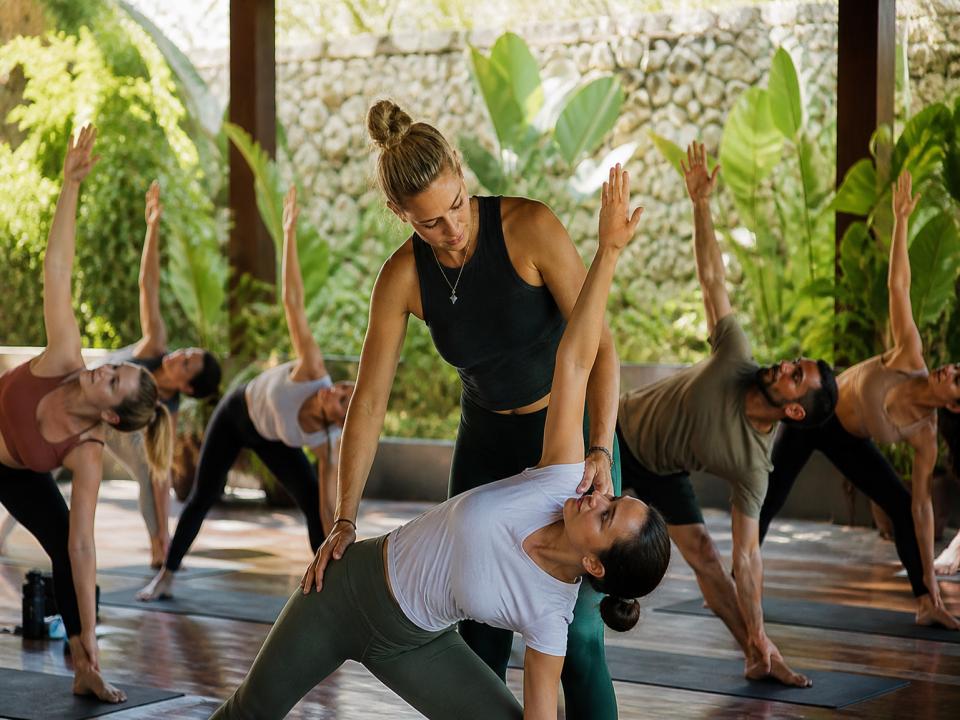
Bali’s popularity isn’t an accident. The island combines three things that matter for intensive training: affordability, a supportive climate for daily practice, and a long-standing culture of spiritual wellness rooted in Balinese Hinduism. Towns like Ubud have hosted international yoga communities for decades, and that history shows up in the quality and density of studios, teacher trainers, and healthy-food infrastructure.
Cost is a real factor too. A residential 200-hour training in Bali often costs a fraction of an equivalent program in the United States, Australia, or Western Europe, even after flights are factored in. Accommodation, meals, and daily practice are frequently bundled into one price, which simplifies budgeting for students traveling from abroad.
There’s also the immersion effect. Training away from your normal environment — away from work email, family obligations, and daily distractions — tends to accelerate learning. Students consistently report that removing themselves from routine helps the material land differently than a weekend workshop back home ever could.
Finally, Bali offers stylistic range. Because so many international teachers relocate there or run seasonal programs, you can find Kundalini, Yin, Hatha, Vinyasa, and Ashtanga trainings almost side by side, often within the same neighborhood. That variety is why so many prospective teachers research Bali first, then narrow down the specific program length and lineage second.
Understanding the Hour System: What 50, 100, and 200 Actually Mean
Before comparing styles, you need to understand what the hour count represents, because it’s tied to certification standards, not just curriculum size.
Yoga Alliance, the largest yoga credentialing body, recognizes 200-hour, 300-hour, and 500-hour trainings as the pathway to the Registered Yoga Teacher (RYT) credentials — RYT 200, RYT 300, and RYT 500. A 200-hour training completed at a Yoga Alliance Registered Yoga School (RYS) is what allows a graduate to register as an RYT 200, which most studios, gyms, and retreat centers treat as the minimum professional qualification for teaching public classes.
Fifty-hour and 100-hour trainings are not independently recognized by Yoga Alliance as standalone teaching certifications. They exist as specialized modules — often built around a single style like Yin or Kundalini — that deepen your practice or supplement a 200-hour foundation. Some 100-hour Yin or Kundalini modules can later be credited toward a 200-hour or 300-hour total if a school structures it that way, but this varies by provider and should always be confirmed directly with the school before you enroll.
This distinction matters enormously for planning. If your goal is to teach professionally and get hired, the 200-hour credential is the realistic entry point. If your goal is personal growth, deepening a home practice, or exploring a specific tradition like Kundalini before committing to a full certification, a 50-hour or 100-hour training can be a meaningful and complete experience on its own — just not a teaching license.
The 50-Hour Program: A Focused Introduction, Not a Teaching Certificate
A 50-hour yoga training is best understood as an intensive deep dive into one narrow area — often a single style, like Yin Yoga, or a single theme, like meditation and pranayama. In Bali, these are commonly offered as short residential intensives running five to ten days.
Who it’s for: People who already have a home practice and want structured, expert-led instruction without committing weeks of time or a large budget. It also suits yoga teachers who are already certified and want a short, focused continuing education module in a specific lineage — for example, an existing RYT 200 teacher adding a Yin specialization.
What you’ll actually learn: Expect concentrated study of anatomy and physiology relevant to the style, the philosophy behind the practice, guided teaching of postures or techniques, and supervised practice teaching in small groups. Because the time is short, depth comes from narrowing the scope, not from covering everything a 200-hour program covers.
What it won’t give you: A 50-hour certificate alone will not qualify you to register with Yoga Alliance as an RYT, and most professional studios will not hire a teacher whose only credential is a 50-hour course. Think of it as a specialty badge, not a driver’s license.
Realistic outcome: Many students leave a 50-hour Bali training with a genuinely transformed personal practice, new breathing and meditation tools, and clarity about whether they want to pursue a full 200-hour certification later. It’s a low-risk way to test whether teacher training is right for you before investing in the bigger commitment.
The 100-Hour Program: A Middle Ground for Specialization
The 100-hour training sits between a short intensive and a full certification. In Bali, these are usually two to three weeks long and are frequently built around a single tradition — Yin Yoga and Kundalini Yoga are the two most common 100-hour offerings, though Hatha-focused versions exist as well.
Who it’s for: Students who want meaningful depth in a specific style without the six- to eight-week commitment of a full 200-hour program. It also works well for certified teachers who want to add a credible specialty to their existing RYT 200 — for instance, a Hatha-trained teacher adding a 100-hour Yin module to diversify the classes they can offer.
What’s typically covered: A 100-hour Yin program, for example, usually includes fascia and connective tissue anatomy, the meridian theory behind Traditional Chinese Medicine as it relates to Yin sequencing, long-hold posture mechanics, and guided practicum teaching. A 100-hour Kundalini program typically covers kriyas (specific sequences of postures, breath, and sound), mantra and chanting practice, the philosophy of the Kundalini lineage as taught by Yogi Bhajan, and supervised teaching of a full class format.
Certification reality: As with the 50-hour course, a standalone 100-hour training does not by itself produce a Yoga Alliance RYT credential. Some schools design their 100-hour Yin or Kundalini modules so they can be combined with an additional 100-hour complementary module to reach the 200-hour threshold — check this explicitly with any school you’re considering, since practices differ.
Realistic outcome: Graduates typically come away able to teach a specific style with genuine competence and confidence, especially in studio environments that already know and trust the specific tradition. For teachers building a niche — say, a Yin-focused restorative practice or a dedicated Kundalini class — the 100-hour route can be more valuable than a broader course that only skims the surface of everything.
 The 200-Hour Program: The Professional Standard
The 200-hour training is the credential most people mean when they say “yoga teacher training.” It’s the internationally recognized threshold for registering as an RYT 200 through Yoga Alliance, and it’s what most gyms, studios, resorts, and retreat centers require before hiring a teacher.
Structure and duration: In Bali, 200-hour trainings typically run three to four weeks as an intensive residential format, though some schools offer part-time or split-schedule versions spread over several months. A residential format means daily practice, lectures, and practicum teaching, usually six days a week, with one rest day.
Curriculum requirements: Yoga Alliance sets minimum hour requirements across five core categories: techniques and practice (postures, breathing, meditation), teaching methodology, anatomy and physiology, yoga philosophy and ethics, and practicum — supervised practice teaching. A legitimate RYS 200 program will structure its schedule around these categories, and a good school will show you exactly how their hours break down before you enroll.
Style focus: Most 200-hour Bali programs are built on a Hatha or Vinyasa foundation, since these traditions cover the broadest base of postures, alignment principles, and sequencing logic that new teachers need. Some schools now offer 200-hour trainings with a Kundalini or Yin emphasis, but a purely single-style 200-hour program is less common than a broad-based Hatha training with elective modules in other styles.
What you walk away with: A 200-hour certificate from a Yoga Alliance Registered School qualifies you to apply for RYT 200 status, teach general public classes, and build a professional teaching résumé. It’s also the required prerequisite before pursuing advanced 300-hour or 500-hour training later.
Who should choose this: Anyone serious about teaching yoga as a side income, career change, or professional credential should start here. It’s a bigger investment of time (typically three to four weeks minimum) and money, but it’s the only one of the three options that produces an internationally portable teaching qualification.
Kundalini, Yin & Hatha: How the Styles Actually Differ
Choosing a program length is only half the decision. The style of yoga shapes your daily experience far more than the hour count does, so it’s worth understanding what each tradition actually involves.
Hatha Yoga is the umbrella term for the physical practice most Western students think of as “yoga” — postures (asanas) held with attention to alignment, combined with breathing techniques. In a teacher training context, Hatha is often used as the foundational, broad-based style because it covers classical postures methodically and at a moderate pace, giving trainees time to study alignment and cueing in detail. If you want a well-rounded base that prepares you to teach almost any general class, Hatha is the most versatile starting point.
Yin Yoga is a slower, quieter practice where postures — mostly seated or reclined — are held for three to five minutes or longer, targeting connective tissue rather than muscle. It draws on both Traditional Chinese Medicine meridian theory and modern fascia research. Yin training tends to appeal to students who are drawn to stillness, restorative practice, and a more introspective teaching style. It’s also popular among teachers who want to serve populations dealing with stress, chronic tension, or limited mobility.
Kundalini Yoga is distinct from both. It combines dynamic, repetitive physical sequences (kriyas) with breathwork, chanting, and meditation, and it’s taught within a specific spiritual lineage established by Yogi Bhajan in the late 1960s. Kundalini classes look and feel different from a typical Hatha or Vinyasa class — expect mantra chanting, specific breath patterns like breath of fire, and an energetic rather than purely physical focus. This style suits students interested in the more esoteric, energetic, and spiritually oriented side of yoga, and it tends to attract a different kind of student than a standard alignment-based Hatha class.
Your choice of style should follow your own practice preferences. If you love slow, meditative stillness, Yin will feel natural to teach. If you’re drawn to chanting, breathwork, and energetic practice, Kundalini will resonate. If you want to teach the broadest range of general public classes, Hatha gives you the most transferable foundation.
How to Choose the Right Program: A Practical Framework
Rather than picking a program based on marketing photos of Bali rice terraces, work through these four questions.
1. What’s your actual goal? If you want to teach professionally, start with — or work toward — a 200-hour RYT-eligible program. If you want personal growth, deeper practice, or to test the waters, a 50-hour or 100-hour intensive is a lower-risk way to start.
2. How much time can you realistically commit? Fifty-hour programs run about a week. Hundred-hour programs run two to three weeks. Two-hundred-hour programs run three to four weeks in residential format, sometimes longer in part-time formats. Be honest about work, family, and financial obligations before committing to travel and time away.
3. Which style matches how you already practice? Don’t choose Kundalini because it sounds exotic if you’ve never taken a Kundalini class. Try a few classes in each style — Hatha, Yin, and Kundalini — either locally or through reputable online platforms, before committing to weeks of immersive training in one tradition.
4. Is the school Yoga Alliance registered, and is that important to you? If a teaching credential matters for your career plans, verify the school’s registration directly through the Yoga Alliance school directory rather than taking a website’s word for it. If credentialing doesn’t matter — because you’re training purely for personal development — this becomes a lower priority.
Answering these four questions honestly will narrow your decision far more effectively than comparing brochures.
What to Expect Logistically in Bali
Understanding the day-to-day reality helps you prepare properly, regardless of which program you choose.
Cost ranges: Fifty-hour programs commonly range from a few hundred to around a thousand US dollars, depending on accommodation level. Hundred-hour programs often fall between one and two thousand dollars. Two-hundred-hour residential programs typically range from roughly $1,500 to $4,000, depending on accommodation quality, school reputation, and inclusions like meals or excursions. Always confirm exactly what’s included — some schools bundle accommodation and meals, others charge separately.
Visa requirements: Most travelers to Indonesia can enter on a visa-on-arrival, valid for a limited stay and extendable once. If your training runs longer than the visa-on-arrival period allows, check current Indonesian immigration requirements well before booking, since rules and durations change periodically.
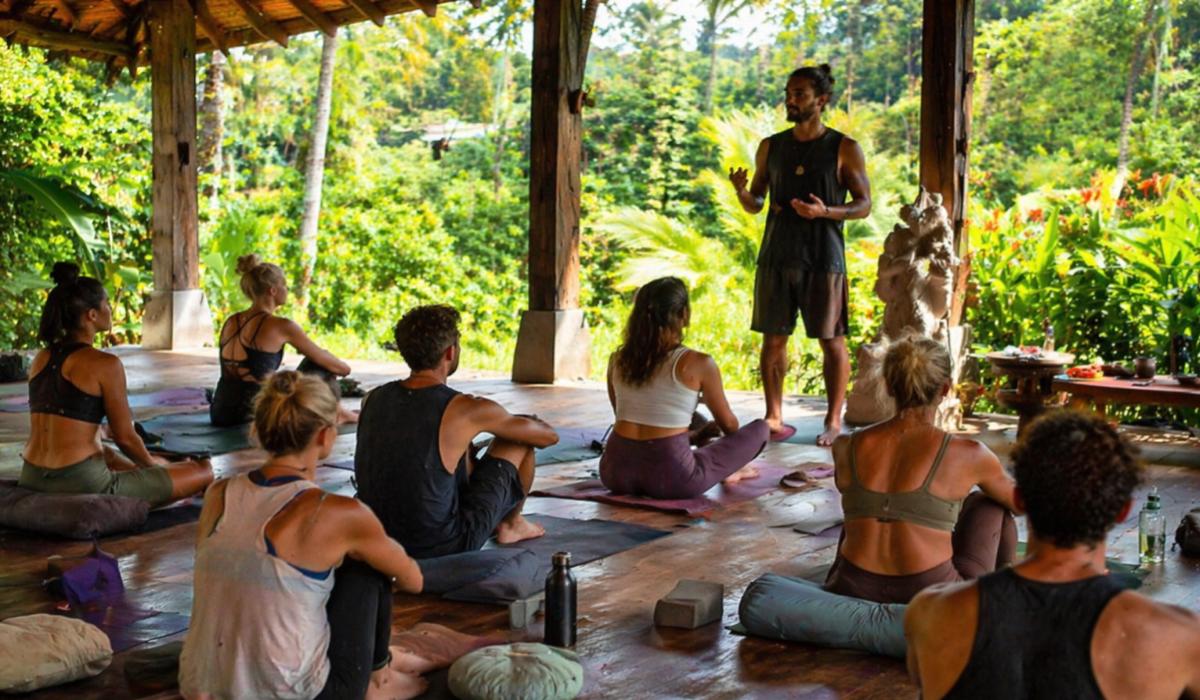
Daily schedule: Residential trainings generally start early, often with meditation or pranayama before sunrise, followed by asana practice, lecture blocks on anatomy or philosophy, a midday break, afternoon practicum or workshop sessions, and evening study or reflection time. Expect six-day weeks with one day off.
Climate and timing: Bali has a dry season roughly from April to October and a wetter season the rest of the year. Training runs year-round, but if you prefer lower humidity and less rain, the dry season months are generally more comfortable for daily outdoor practice.
Accommodation styles: Programs range from simple shared dormitory rooms to private villas with pools, which significantly affects price. Decide your budget and comfort requirements before comparing schools, since accommodation quality is often the biggest cost variable between otherwise similar programs.
Food and dietary needs: Most residential programs in Bali include vegetarian meals as part of the training philosophy, reflecting the yogic principle of ahimsa, or non-harm. If you have specific dietary requirements, such as vegan, gluten-free, or allergy considerations, confirm with the school in advance rather than assuming the kitchen can accommodate every request on short notice.
Connectivity and downtime: Many training venues sit outside busy tourist areas to support focus and quiet practice, which can mean limited wifi or mobile signal. If you need to stay reachable for work, ask the school about connectivity before you arrive, and set expectations with employers or family that you may be less available during the training.
 Common Mistakes to Avoid When Choosing a Program
A few recurring mistakes cause real regret among students, and they’re all avoidable with a little research.
Assuming any certificate equals a teaching license. As covered above, only 200-hour (and higher) Yoga Alliance–registered trainings lead to RYT status. Don’t assume a 50-hour or 100-hour certificate will satisfy a studio’s hiring requirements — check directly with any studio you hope to teach at.
Choosing a style based on aesthetics rather than fit. A style that looks beautiful in photos — like a dramatic Kundalini turban and chant session — might not match your actual teaching temperament. Sample the style in real classes before committing weeks of training to it.
Ignoring school accreditation. Not every school claiming “certified” training is a registered school with Yoga Alliance or an equivalent recognized body. Verify directly rather than trusting marketing language.
Underestimating the physical and emotional intensity. Residential trainings, especially 200-hour intensives, are physically demanding and can surface unexpected emotional material through deep practice. Go in prepared for a genuinely challenging, transformative experience — not a relaxing holiday.
Booking based on price alone. The cheapest program isn’t automatically a bad choice, and the most expensive isn’t automatically the best. Compare curriculum hours, lead trainer credentials and experience, class sizes, and what’s included before deciding on price.
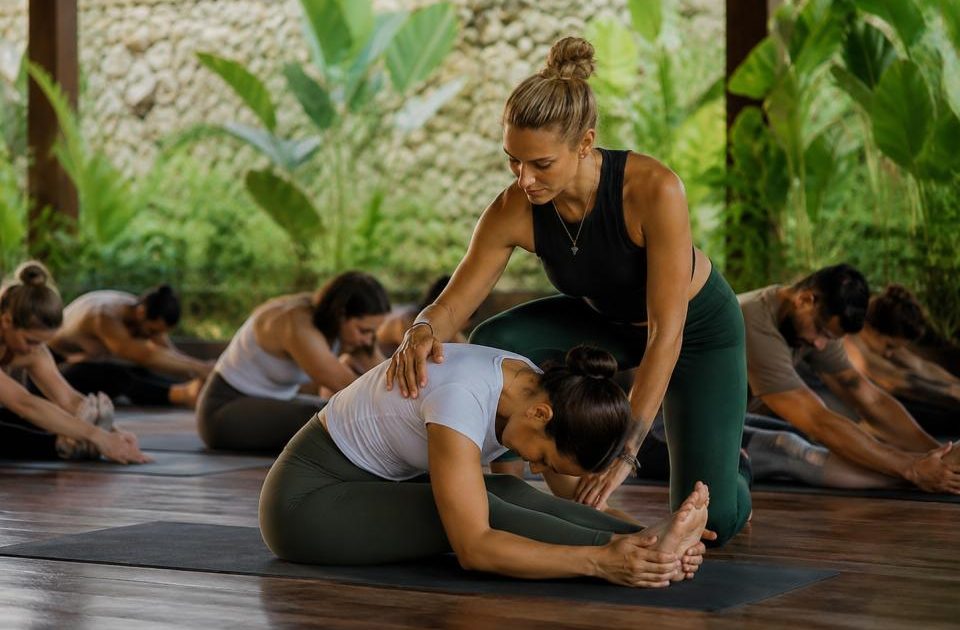
Not asking about class size and mentorship. A training with 40 students per lead trainer offers far less individual feedback than one with 12. Ask directly how many trainees are enrolled and how many trainers or assistants will be on hand for practicum sessions, since hands-on correction is where much of the real learning happens.
Forgetting to check cancellation and refund policies. Deposits for residential trainings are often non-refundable, and travel disruptions happen. Read the school’s cancellation terms before paying, and consider travel insurance that covers trip interruption if you’re booking flights months in advance.
Conclusion: Matching the Program to Your Purpose
Choosing between Yoga Teacher Training in Bali: 50-Hour, 100-Hour & 200-Hour Programs (Kundalini, Yin & Hatha) comes down to one core question: what do you actually want from the experience? A 50-hour intensive suits students who want a focused, low-commitment deep dive into one practice. A 100-hour program suits those who want real depth in a specific style, whether as a standalone experience or a specialty add-on to existing credentials. A 200-hour program is the only path to a professionally recognized RYT credential, and it’s the right choice if teaching is your genuine goal.
Layer your style choice on top of that decision. Hatha offers the broadest, most transferable foundation. Yin suits a slower, introspective teaching path. Kundalini suits students drawn to breathwork, chanting, and a distinct spiritual lineage. There’s no universally “best” option — only the option that matches your time, budget, goals, and the kind of practice that genuinely resonates with you. Take the time to verify accreditation, compare real curricula, and be honest about what you’re hoping to get out of the experience, and Bali can deliver a training that fits.